Blog
How to block unwanted calls
The measures that work, ordered by how much each one removes, with the gap next to each. Nothing on this list is complete, and that is the useful part.
John · Owner and CEO · 4 min read ·
Work down from the measure that removes the most, not up from the easiest. Screening before the phone rings removes almost all automated traffic. Carrier labelling removes numbers with history. Voicemail removes the interruption. The Do Not Call list removes compliant sellers. Blocking a number removes that number, and little else.
First, be clear about what you are stopping
Three different problems get filed under "unwanted calls", and they have three different answers.
Automated sales calls are placed by software with no human on the line until you engage. They are the bulk of the volume, and what a robocall is draws the line between these and the appointment reminder from your dentist, which is placed the same way.
Compliant telemarketing is a real person from a real company, calling because you are on a list they bought. This is the category the Do Not Call registry was built for, and the only one it governs.
Outright fraud ignores every rule, including the ones that would make it easy to trace. No registry touches it.
If you register on a list and the calls continue, this is usually why: you solved the second problem while the first and third were the ones ringing.
What each measure removes, and what it cannot touch
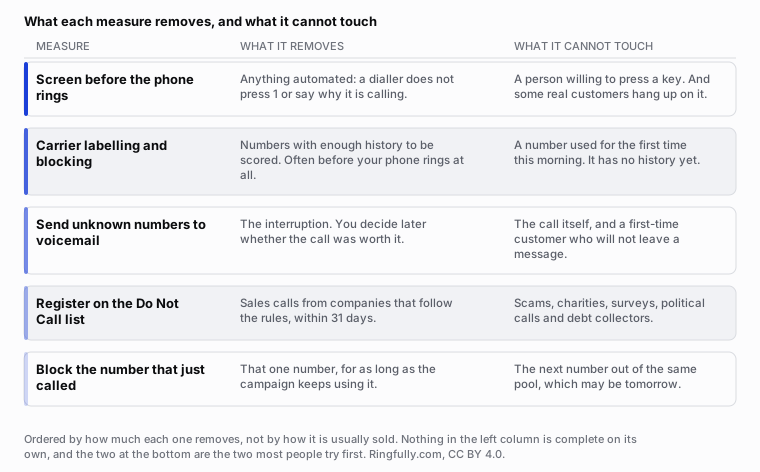
Ordered by how much each one removes, not by how it is usually sold. The right-hand column is the part that is normally left out.
Reuse this figure anywhere, including commercially, with credit to Ringfully and a link back to this page. CC BY 4.0.
Screen before the phone rings. A greeting that asks for a keypress, or a menu that asks the caller to choose, filters on behaviour rather than on identity. Automated dialling does not respond to it. This is the only measure on the list that works against a number nobody has ever seen before, which is why it is first.
Carrier labelling and blocking. Your phone company scores numbers on behaviour and either labels the call or stops it before your phone rings. The FTC's guidance on blocking unwanted calls suggests asking your provider what it offers, and notes the limit in the same breath: scammers use faked numbers, and "not all scam calls will get flagged".
Send unknown numbers to voicemail. This removes the interruption rather than the call, and it moves the decision to a moment when you are not being pressured. The cost is real and it is invisible: some first-time callers will not leave a message. If voicemail is where your unknown callers land, it is worth knowing exactly where a message goes and who checks it.
Register on the Do Not Call list. Free, permanent, and it applies to cell phones as well as landlines. Registration takes effect the next day and sellers get 31 days to act on it. The FTC's own registry FAQ is clear that it "won't stop calls from scammers making illegal calls", and that political calls, charities, debt collectors and surveys are outside it.
Block the number that just called. Two seconds, worth doing, and the least effective thing on this page. The number was rented and is about to be discarded anyway, for the reasons in why you get so many spam calls.
On a personal phone
Turn on whatever your carrier offers first, because it acts before your phone rings and costs nothing. Then use the handset's own setting to silence callers who are not in your contacts, if you can live with checking voicemail. A call-blocking service adds a third layer that draws on reported numbers, and the FTC's page above explains how those decide what to flag.
Register the number. It takes a minute at donotcall.gov and it never expires.
On a business line
The calculation is different, because the phone is how customers reach you and every filter you add is also a filter on revenue.
Do not silence unknown numbers on a business line. Unknown is what a new customer looks like.
Instead, put one short step in front of the ring. A greeting of a few seconds that asks the caller to press a number sorts automated traffic from people without turning anyone away who genuinely wants to reach you. Keep it to one step and make the option obvious. The full trade, including who you lose, is in screening calls without losing customers.
If your business also makes outbound calls, the obligations run the other way too, and they are covered in what the do-not-call rules ask of you.
What none of this fixes
Nothing here reaches a number that has not been used yet, and the supply of unused numbers is effectively endless. Every measure on this page is a reduction. Treating any of them as a solution is how people end up disappointed and then unprotected, because they turn the tight setting on, lose two customers, and turn everything off.
Set the level once, deliberately, and write down what you chose so the next person does not undo it by accident.
What to do this week
- Register your personal number, and check what your carrier already offers on the business line.
- Call your own business number from an outside phone and listen to the first eight seconds a stranger hears.
- Decide whether a keypress step belongs in front of it, using the trade in the screening article rather than by instinct.
The rest of this topic is in spam and call blocking. If you want somebody to listen to those eight seconds with you, ask us.
Questions people ask
- What is the single most effective thing I can do?
- Stop letting unknown callers reach a person directly. On a business line that means a short greeting that asks the caller to press a key, which no dialler will do. On a personal phone it means letting anything you do not recognise go to voicemail. Both cost you something, and both work.
- Do call-blocking services actually work?
- They remove a real share of the traffic, and they cannot touch a number being used for the first time this morning. Carrier scoring needs history to work with. That gap is structural rather than a flaw in any one product, so treat blocking as a reduction and not as a solution.
- Should I register on the Do Not Call list?
- Yes, because it is free, permanent and takes a minute, and no, it will not do what you are hoping. It stops sales calls from companies that intend to follow the rules within 31 days. It has no effect on scams, charities, political calls, surveys or debt collectors.
- Is it worth blocking each number as it calls?
- It is the least effective measure on the list, because the number is the part the campaign expects to lose. Block it if it takes two seconds, but do not expect the list to catch up. The pool it came from is refilled far faster than you can add entries.
- Will blocking calls make me miss customers?
- It can, and the cost is usually invisible because a caller who gives up leaves no trace. A first-time customer who reaches a screening prompt sometimes hangs up rather than pressing a key. Decide how tight to set it deliberately rather than by default.
About the author
John
Owner and CEO
Owner and CEO with over 10 years of experience in the IT industry, including more than 5 years specializing in VoIP and cloud communications. Experienced in designing, deploying, and supporting reliable communication solutions for businesses.

Keep reading
If unwanted calls are burying the ones from customers, or your own number shows up wrong when you call out, tell us which, and we will say what a phone system can change and what it cannot.