Blog
Caller ID lookup: what it can tell you
A reverse lookup answers questions about a number, not about a person. What the query can actually establish, what it cannot, and what to do instead.
John · Owner and CEO · 7 min read ·
A lookup answers questions about a telephone number: whether it is in service, which carrier holds it, what kind of line it is, and what name has been filed for it. It cannot answer questions about a person, because the number never carried that information. Knowing which column your question is in saves the time.
That split is the whole of it, and it is not a matter of paying for a better service. Here is each side, and what to do with an unknown number instead. It sits with the rest of spam and call blocking.
What a lookup is actually querying
Not one thing. A lookup is usually two or three separate queries stitched into one answer, and knowing which is which tells you how much to trust each part.
Routing and portability records say which carrier holds a number today. Those are kept current for an unglamorous reason: calls have to reach it. A record that is wrong stops calls working, so it gets fixed. This is the most reliable part of any lookup.
Line-type data comes from the same family of records and says whether a number is wireless, wired, or carried over the internet. Reliable in the same way and for the same reason.
The caller-name record is different in kind. It is a name somebody filed, in a database somebody maintains, with no sweep for correctness. Twilio's caller name lookup documentation is candid about the shape of it: the service is "only available for phone numbers owned by carriers in the United States", and it is "billed per request, even if no data is returned". A paid query that routinely returns nothing is not a lookup into a register of people. It is a question asked of a database that may not have been told.
How caller ID actually works is the mechanism behind that third one, and why the name and the number reach a handset by entirely different routes.
What it can establish
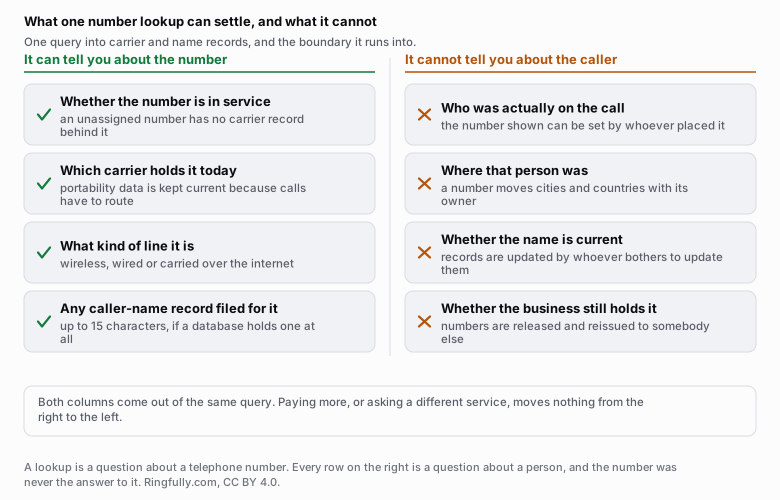
Both columns come out of the same query. Paying more, or asking a different service, moves nothing from the right side to the left.
Reuse this figure anywhere, including commercially, with credit to Ringfully and a link back to this page. CC BY 4.0.
Four things, and they are genuinely useful within their limits.
Whether the number is in service. An unassigned number has no carrier record behind it. Useful for cleaning a list before you spend money calling it.
Which carrier holds it today. Current, because routing depends on it.
What kind of line it is. Wireless, wired, or internet-carried. This is the one with real operational value: it is how you avoid dialling a cell phone with something intended for an office, and how a list gets segmented before anybody picks up a handset.
Any caller-name record on file. Up to fifteen characters, in capitals, if a database holds one at all.
Notice that all four are properties of the number. Not one of them is a property of a person.
What it cannot establish, and why paying more will not help
Who was on the call. The number displayed is chosen by the originating side. That is ordinary and necessary, a business with twelve extensions presents one published number for all of them, and it also means a displayed number is not evidence about the speaker. Looking up a number tells you about the number, whether or not the call actually came from it.
Where the person was. A number keeps its area code when its owner moves. People carry numbers across cities, employers and decades. An area code says which numbering territory a number was issued in, at some point in the past.
Whether the name is current. Records are updated by whoever bothers. A name filed by a previous holder can sit there for years, which is the same mechanism behind why your business name shows up wrong.
Whether the business still holds the number. Numbers are released and reissued. A lookup returning a company name is not evidence that the company still has the line.
None of those four moves to the other column with a better service or a paid tier, because none of them is a gap in the data. They are questions the mechanism was never built to answer.
The free lookup sites
Worth naming the pattern, because it wastes a lot of people's afternoons.
Most free reverse-lookup sites are reading the same name records everybody reads, alongside scraped public listings whose age is not shown. They are built to convert an anxious search into a subscription, so the interface is designed to look like it knows more than it has, and a partial result is presented as a teaser rather than as a limit.
Two things to look for. Is there a date on the record? A name with no "as of" is a name of unknown age, and age is the whole question. Does it distinguish the carrier record from the name record? The first is current by necessity; the second is not, and a site that blends them is telling you one confidence level for two very different facts.
The general form of the problem: something can look valid, pass every check you can run from a keyboard, and still not be what you think, which is why a valid number is not an active line.
What to do with an unknown number instead
The honest answer is that looking up digits is usually the slower route to the thing you want to know.
If it is ringing now: answer it, or let it go to voicemail. Both answer the real question, which is whether this person needs something from you, and both take less time than research. A caller who wants something will say so. A caller who wants nothing will not leave a message.
If they claim to be an institution: hang up and dial the number you already have. Not the number they gave you, and not the number that called. This works regardless of what any lookup would have said, and it is the one habit that survives every trick built on a displayed number.
If it is a number you missed and you are deciding whether to call back: the useful signals are whether they called more than once and whether they left a message. A stranger who calls once and leaves nothing is almost never worth the callback.
If you take business calls all day: the answer is not a lookup at all, it is a system that captures who called and why. Every call reaching one published number, with a message when nobody is free, means an unknown number becomes a name and a reason without anybody researching anything. Small business voicemail and where a message goes is what that looks like when it is set up properly.
One number worth knowing
Unwanted calls remain a real problem and the scale of it is public. The FTC's Do Not Call Registry Data Book announcement for fiscal 2025 reports that more than 4.7 million additional phone numbers were added to the Registry that year, bringing it to about 258.5 million active registrations as of 30 September 2025, and that reports of unwanted calls stand about 48% below fiscal 2021, when the FTC received approximately five million of them.
Which is worth holding alongside everything above. Registering a number and reporting calls are collective mechanisms that appear to be doing something. Looking up an individual number, one at a time, after the phone has already rung, is not one of them, and the two get confused because both feel like taking action.
Ringfully does not sell a lookup service and does not check your callers for you. What it does is make sure that when somebody rings your published number, they reach a person or leave a message that says who they are and what they want, which is the answer the lookup was standing in for. What a plan costs is per seat with the minutes included.
Questions people ask
- What does a caller ID lookup actually tell you?
- Facts about the number. Whether it is in service, which carrier holds it today, what kind of line it is, and whatever caller-name record has been filed for it. Those come from records that exist because calls have to route and because somebody chose to file a name. All four are properties of the number, not of the person who used it.
- Can a reverse lookup tell me who called me?
- No, and this is the limit that matters. It can tell you what is on file for the number that was displayed. It cannot confirm that the number shown was the number the call came from, that the person on the line holds it, or that the name on file was updated after the last time the number changed hands.
- Are free reverse phone lookup sites accurate?
- They are usually working from the same name records everybody else reads, plus scraped public listings of unknown age, and they are built to sell you a subscription rather than to answer your question. A result presented with confidence and no date on it is the shape to be suspicious of. Nothing here is verified for you by anybody.
- Can I tell where a caller is from the area code?
- Not reliably, and it has been unreliable for years. A number keeps its area code when its owner moves, and people routinely keep a number across several cities and jobs. An area code says which numbering territory a number was issued in, at some point in the past. It says nothing about where anyone is now.
- What should I do with an unknown number instead?
- Answer it and find out, or let it go to voicemail and read what they say. Both are faster than researching digits, and both work on the question you actually have, which is whether this person needs something from you. If a caller claims to be an institution, hang up and dial the number you already have for them.
About the author
John
Owner and CEO
Owner and CEO with over 10 years of experience in the IT industry, including more than 5 years specializing in VoIP and cloud communications. Experienced in designing, deploying, and supporting reliable communication solutions for businesses.

If unwanted calls are burying the ones from customers, or your own number shows up wrong when you call out, tell us which, and we will say what a phone system can change and what it cannot.