Blog
Types of VoIP phone systems
Hosted, on-premise and hybrid differ on one thing: where the switching runs. What that decides about cost, control and who fixes it at 8am on a Monday.
John · Owner and CEO · 5 min read ·
VoIP phone systems come in three shapes, and they differ on one question: where the switching runs. Hosted means in a provider's data centre. On-premise means in a box in your building. Hybrid means your own box, fed by internet trunks instead of carrier lines. Everything else follows from that answer.
What is actually different
The switching is the part that decides where a call goes: which extension rings, what the menu says, what happens after four rings, who is allowed to dial internationally. In an old PBX it was a physical box on a wall. In a VoIP system it is software, and the only real question is whose computer runs it.
The protocol is not the difference. All three usually speak SIP, defined in RFC 3261, and they all rest on the same mechanics, set out in what VoIP is and how it works. A handset cannot tell you which shape it is plugged into. Vendors sometimes present hosted and on-premise as different technologies. They are the same technology in different places.
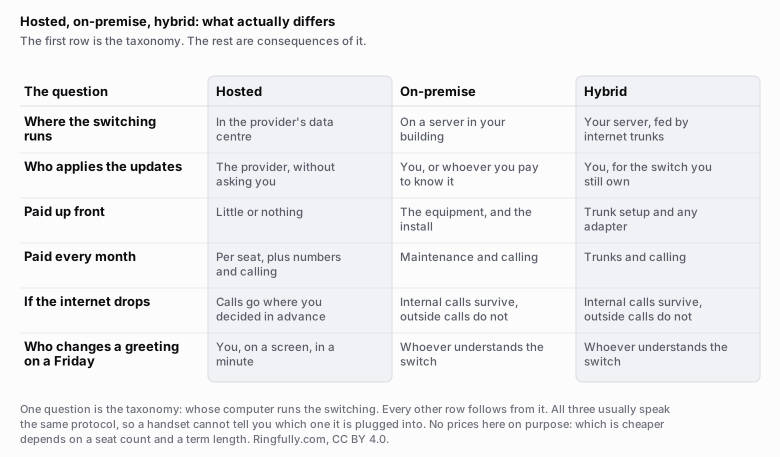
One question separates the three: where the switching runs. Every other row on this table follows from it.
Reuse this figure anywhere, including commercially, with credit to Ringfully and a link back to this page. CC BY 4.0.
Hosted: the switching is somebody else's problem
You subscribe. The provider runs the software, holds the numbers, applies the updates and owns the hardware failure. You get a screen where you change what happens to calls, and the change is live in a minute.
What you are buying is the absence of a dependency. Nobody has to know how the switch works, nobody has to be available when it does not, and there is no equipment ageing in a cupboard.
What you give up is control at the edges. If you need the phone system to do something the provider has not built, you cannot build it yourself. You are also committing to their availability, their pace of change and their decisions about what the product should be.
Also worth naming: with hosted, your call records and settings sit on infrastructure you do not run. That is a real question for some businesses and a non-question for most. Ask any provider where the data actually lives before you assume.
On-premise: the switching is yours
You buy the switch, it lives in your building, and it is your equipment. Modern versions are software on a server rather than a proprietary box, which makes them cheaper and more capable than the PBX generation they replaced.
The case for it is control and marginal cost. Adding the hundredth person to a system you already own is nearly free, where the hundredth seat on a hosted plan costs the same as the first. If you need behaviour nobody sells, you can build it. If you have a compliance requirement that pins where recordings sit, you can satisfy it precisely.
The cost is that everything is now yours. The purchase, the server, the updates, the security of it, and, most expensively, a person who understands it. That last one is the real bill. On-premise systems rarely fail because the software was bad. They fail because the one person who understood it left.
Hybrid: your switch, internet trunks
This is what most businesses with a working PBX actually do first, and it is often the right move.
The handsets, extensions, menus and habits stay exactly as they are. What changes is the supply into the switch: the bundle of carrier lines is replaced by SIP trunks delivered over your internet connection. Calling gets cheaper immediately, capacity stops being a physical constraint, and nobody has to be retrained.
Understand what it is, though. Hybrid captures the savings and postpones the decision. You still own the switch, you still need somebody who knows it, and you have added an internet dependency to a system that did not have one. It is a bridge, and bridges are for crossing.
The questions that separate them
Ask these of any quote, in this order.
- Where does the switching run, and who applies its updates? This is the whole taxonomy in one question.
- What is paid up front, and what is paid monthly? A capital purchase plus maintenance and a per-seat subscription are not comparable numbers. The true cost of a business phone system shows how to put both on the same footing over three years.
- How long is the commitment, and what is owed if you leave early? Hardware bundled into a monthly price is a loan with a term.
- Who changes the greeting on a Friday afternoon? If the answer is a ticket, that is the difference you will feel every week, far more than the price.
- What happens when the internet drops? With hosted, calls go wherever you told them to go in advance. With on-premise, internal calls between extensions survive and external calls do not. Neither is a rescue.
- Who holds the numbers, and how do they leave? Porting is what makes the choice reversible. A provider who is vague about it is telling you something.
What a small business usually ends up with
Below a few dozen people, hosted, almost always. The fixed cost of owning a switch does not pay back at that scale, and the dependency it creates on one knowledgeable person is a worse risk to a ten person business than any monthly fee.
The exceptions are real but specific: an unusual requirement no product covers, a site where the internet is genuinely unreliable and internal calling has to survive, or an existing switch with years of value left in it, which is the hybrid case.
If you have a quote in front of you and cannot tell which of the three it is describing, send it over and we will tell you which questions it has not answered. For what the subscription form of this actually includes, what is VoIP phone service goes line by line, and the rest of VoIP basics covers the mechanics underneath all three.
Questions people ask
- What are the main types of VoIP phone system?
- Three. Hosted, where the switching runs in a provider's data centre and you rent it per person. On-premise, where you own a switch that sits in your building and buy call capacity for it. Hybrid, where you keep your own switch but replace the old lines feeding it with SIP trunks over the internet. The protocol underneath is the same in all three.
- What is the difference between hosted VoIP and on-premise VoIP?
- Who owns and runs the switching. Hosted means the provider does, you pay monthly, and changes are a screen you open. On-premise means you own the equipment, pay for it up front, and changes usually mean somebody who knows that equipment. Hosted trades control for not having to care. On-premise trades convenience for control and for a lower marginal cost at large scale.
- What is a hybrid VoIP system?
- An existing on-site switch that has had its old carrier lines replaced with SIP trunks delivered over the internet. It is what most businesses with a working switch actually do first, because it captures the calling savings without touching the handsets, the extensions or the training. It is a bridge, and it postpones the decision rather than making it.
- Which type is cheapest for a small business?
- Hosted, almost always, below roughly a few dozen people. On-premise has a large fixed cost that only pays back over many seats and several years, and it adds a dependency on whoever maintains it. The comparison that matters is total cost over the length of the commitment, not the monthly figure.
- Does an on-premise system keep working if the internet fails?
- Internal calls between extensions in the same building usually keep working, because they never leave the switch. Calls to and from the outside world stop, because those now travel over the same failed connection. So it protects less than people expect, and the protection it does give matters only in a business where people phone each other across a building.
- Do I need to decide before I get quotes?
- No, but you should know which one each quote is for. A per-seat monthly figure and a capital purchase plus a maintenance contract are not comparable numbers, and vendors are not always explicit about which they are selling.
About the author
John
Owner and CEO
Owner and CEO with over 10 years of experience in the IT industry, including more than 5 years specializing in VoIP and cloud communications. Experienced in designing, deploying, and supporting reliable communication solutions for businesses.

Keep reading
If you are working out whether VoIP suits your team, tell us how many people answer the phone and what your connection is like, and we will say plainly whether it fits.