Blog
What to do with your old desk phones
Which handsets can be reused, which are scrap, and the vendor lock most people find out about after cancelling the old account. Plus what reuse really costs.
John · Owner and CEO · 7 min read ·
Some of them can be reused and most cannot, and the label on the bottom usually tells you which. A digital handset from the old switch is scrap. A SIP phone might work, if the previous provider releases it and its firmware is recent enough. Reuse is decided by how long it takes, not by the hardware.
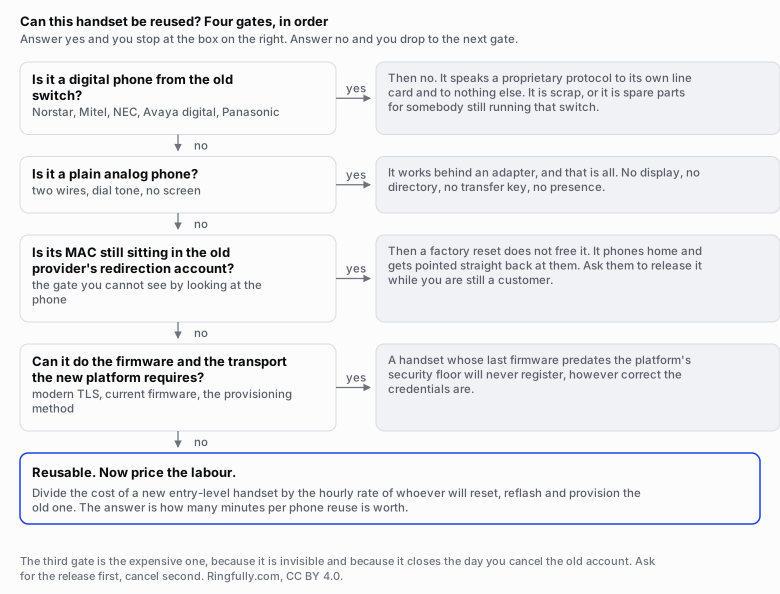
Four gates in order. The third one cannot be answered by looking at the phone, which is why it is the expensive one.
Reuse this figure anywhere, including commercially, with credit to Ringfully and a link back to this page. CC BY 4.0.
First, turn one over and read the label
Everything starts with what kind of phone it is, and the sticker on the bottom tells you. You are sorting into three piles.
Digital handsets carry a model number from a switch vendor: Norstar, Partner, Mitel Superset, NEC Dterm, Panasonic KX-T, Avaya's digital sets. They have a screen, buttons and a single cable to the closet.
Analog phones have two wires, no screen and no ambition.
SIP phones carry a MAC address on the label, an ethernet port on the back, and usually a second ethernet port for the computer to pass through. Poly and Polycom VVX, Yealink T-series, Grandstream, Snom, Cisco SPA and MPP models.
The digital handsets: no
A digital handset speaks a proprietary protocol to a specific line card in a specific switch, on the station side described in what a PBX phone system is. It is not a phone that happens to be attached to a system, it is a terminal of that system. There is no adapter, no firmware and no configuration that changes this.
They are worth something to exactly one buyer: somebody still running that switch who needs a spare. The secondhand market for old switch parts is real and small. Everything else is recycling.
Do not spend an afternoon looking for a way around this. There isn't one.
The analog phones: yes, and barely worth it
A plain analog phone works anywhere there is dial tone, including behind an adapter on a modern system. It will ring and it will dial.
What it will not do is anything else. No display, so no caller ID that means anything and no way to see who is calling. No directory. No transfer key that does what people expect. No indication that a colleague is on a call. On a system where the useful features live on the screen, an analog set is a phone that can only answer.
Keep one for the loading dock. Do not build a floor on them.
The SIP phones: maybe, and here is the trap
This is the pile worth thinking about, and there are two gates.
The lock nobody mentions until it is too late
Phones sold by a provider are usually tied to that provider through a manufacturer-run redirection service. Poly, Yealink and Cisco each run one. The mechanism is simple and it is the thing to understand:
When the phone boots, before it does anything else, it asks the manufacturer's service where its configuration lives. The service looks up the phone's MAC address, finds which provider claimed it, and hands back that provider's provisioning URL. The phone fetches its settings from there.
A factory reset does not touch this, because the answer is not stored on the phone. It is stored in an account you do not control. Reset the phone as many times as you like and it will keep finding its way home.
Only the party holding that MAC address can release it. So ask them, in writing, while you are still a paying customer. Once the account is closed the request tends to fall between departments, and if the reseller who sold you the phones has gone out of business, there may be nobody left with a login.
Put this on the checklist beside the port paperwork. It costs one email and it is the single most common reason a box of perfectly good handsets ends up as scrap.
Whether it can meet the new platform at all
The second gate is age. A handset only registers if it can speak the way the platform requires, and platforms have moved:
- Transport and encryption. A phone whose last firmware predates modern TLS will never register to a platform that requires it, however correct the credentials are.
- Firmware availability. Check that the manufacturer still publishes a load for that model. A discontinued model with no current firmware is a security problem you are choosing to keep.
- The firmware family. Some Cisco desk phones ship in two incompatible loads, one for their own call manager and one for third-party SIP. A phone in the wrong load has to be converted before it will register anywhere else, and that is its own afternoon.
- The admin password. The installer set one. On some models you need it in order to factory reset, which is a circular problem if the installer has moved on.
If the phone clears both gates, it will work. Now do the arithmetic.
The arithmetic that actually decides it
Price a new entry-level SIP handset from any distributor. Divide that price by the hourly rate of whoever is going to reset, reflash and provision the old ones. The answer is how many minutes per phone reuse is worth.
For most small businesses that number lands somewhere around twenty minutes. An unfamiliar model, with a firmware upgrade and a provisioning quirk, takes longer than twenty minutes for the first one and about eight for the rest. So the honest rule is: reuse a floor of phones you already know how to configure, and buy new rather than learn a model you are going to retire in three years anyway.
Count the power supplies too. Older handsets may want a wall brick rather than power over the ethernet cable, and a floor of bricks is a drawer of bricks within a year.
The headsets are the part that carries over
This gets missed and it is the most reusable thing in the building.
A headset that plugs into the handset with a small modular connector is tied to the handset and goes with it. A USB headset or a Bluetooth headset is not tied to anything: it works with a computer, which is where most people now answer.
Before you write off the whole pile, sort the headsets separately. They are the expensive per-person item, people are attached to the ones that fit, and on a system where calls are answered on a computer they carry over unchanged. The true cost of a business phone system has more on which line items actually move.
What to do with the ones you retire
Two steps, in this order.
Factory reset every phone before it leaves the building. A provisioned handset holds its account credentials in its configuration, and often the company directory as well. A phone sold on eBay with a working SIP account in it is a phone bill somebody else is going to run up. Reset it, then check it actually cleared by booting it on a network with no provisioning server.
Then recycle them properly. Desk phones are regulated electronic waste in most states, and the EPA maintains a page on electronics donation and recycling that points at certified recyclers. A charity or a school will occasionally take a working analog set. Nobody wants your digital handsets.
More on this topic in migration. If the whole system is going, how to replace an aging PBX puts the handsets in their proper place in the sequence, which is near the end.
Where this lands with us
Worth saying plainly, because it changes the answer: Ringfully has no desk phones. People answer in a browser tab or in the Windows desktop application, with a headset. There is nothing to provision, no MAC address to register, and no handset to buy.
So if you are moving to us, the reuse question is not about phones at all. It is about headsets, and the answer is that the USB and Bluetooth ones come with you. The desk phones go to the recycler, and the box in the closet goes with them.
If you want to know what your people actually need on the desk, ask us and we will tell you before you buy anything.
Questions people ask
- Can I reuse my old desk phones on a new phone system?
- Only if they are SIP phones. A digital handset from the old switch speaks a proprietary protocol to its own line card and to nothing else, so it cannot be reused at all. A plain analog phone works behind an adapter with no display and no transfer key. A SIP phone might work, subject to two conditions that catch most people.
- Why does my old VoIP phone keep connecting to my previous provider?
- Because its MAC address is still registered in a manufacturer-run redirection service that the previous provider claimed. On boot, the phone asks that service where its configuration lives and gets pointed back at them. A factory reset does not change it, because the setting is not stored on the phone. Only the party holding the MAC can release it.
- How do I get a desk phone released from my old provider?
- Ask them to remove the MAC address from their provisioning account, and ask while you are still a paying customer. Once the account is closed the request often goes nowhere, and if the reseller who sold you the phones has gone out of business there may be nobody left to ask.
- Is it worth reusing old SIP phones?
- Do the arithmetic before you decide. Divide the price of a new entry-level handset by the hourly rate of whoever will reset, reflash and provision the old one. That gives you the number of minutes per phone that reuse is worth. In practice it is often twenty minutes, and an unfamiliar model takes longer than that.
- What should I do with desk phones I am not keeping?
- Factory reset every one before it leaves the building. A provisioned phone holds its account credentials and often the company directory in its configuration. Then recycle them through an electronics recycler rather than the dumpster, because in most states they are regulated electronic waste.
About the author
John
Owner and CEO
Owner and CEO with over 10 years of experience in the IT industry, including more than 5 years specializing in VoIP and cloud communications. Experienced in designing, deploying, and supporting reliable communication solutions for businesses.

Keep reading
A free tool for this, in your browser: the phone cost comparator.
If you are leaving an on-premise system or a Centrex line, tell us what you have and when the contract ends, and we will lay out the order things have to happen in.